Planning
When to go to the Maldives, month by month
Twelve months in the Maldives, read from the official climate records for the north, Malé and the far south, with the one experience from the Kollection that each month suits best.
Updated
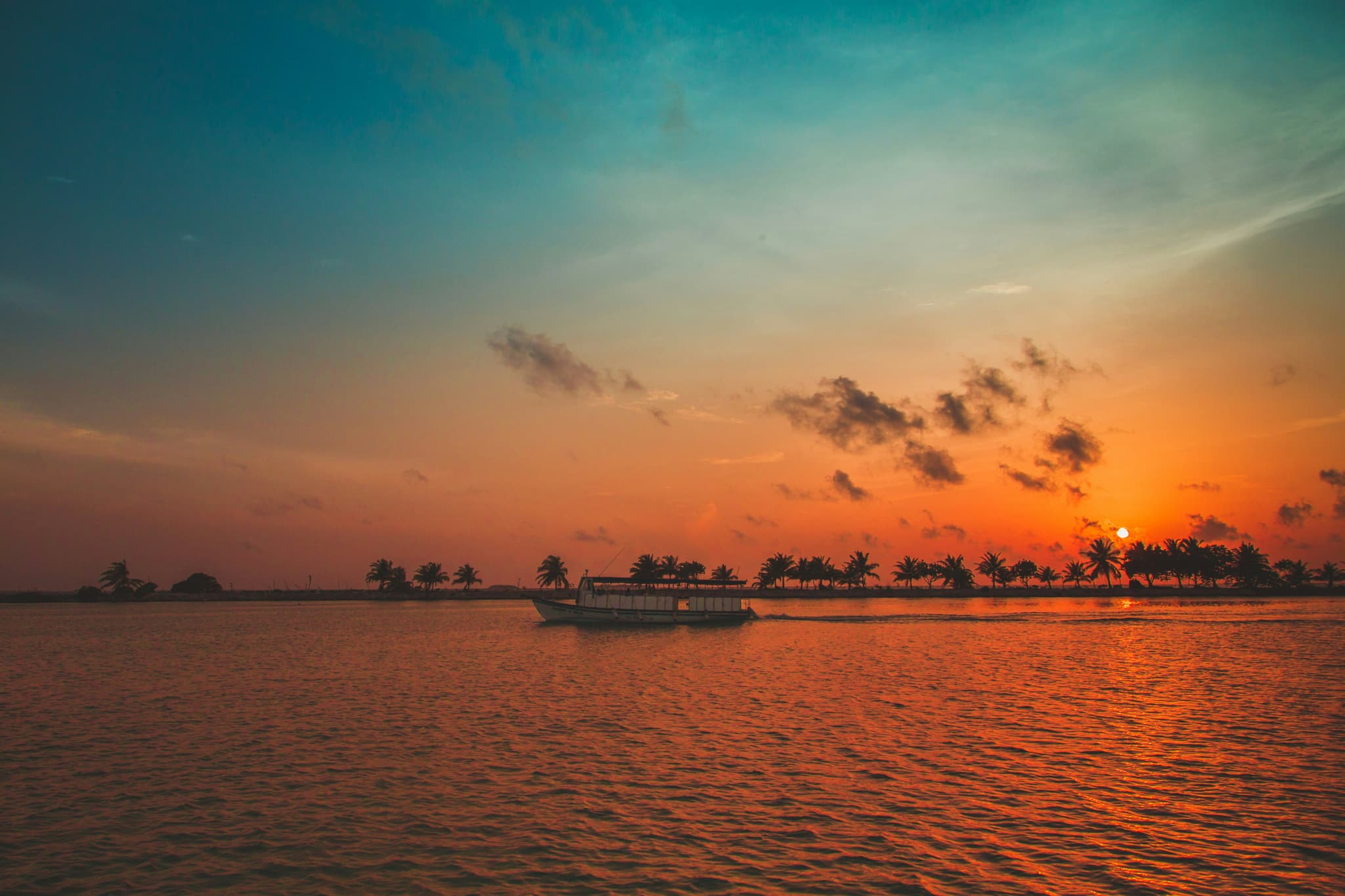
Ask when to go to the Maldives and the usual answer is November to April, the dry season, and that is where the advice tends to stop. The country's own Meteorological Service draws the dry months more tightly, from January to March, and the islands run far enough from north to south that January can be almost rainless on a northern atoll while Addu, in the far south, collects more than 200 mm.
So there is no single best month, only the one that suits what you have come for. The dry months bring the clearest water and the longest hours of sunshine, and with them the busiest weeks of the year. The wet monsoon brings the plankton that draws hundreds of manta rays into Hanifaru Bay, the swell that rolls into the Malé atolls, and the quietest, most generous weeks to have a resort almost to yourself.
What follows reads the official climate records month by month, for the north, for Malé and for the far south, and pairs each month with one experience from the Kollection that it suits best.
Month by month
North-east monsoon · Malé 87 mm of rain · sea 28.1 °C
January
January sits in the heart of the Iruvai, and it shows. Malé averages 8.3 hours of sunshine a day and just five or six wet days across the month, the wind comes steadily off the ocean from the east-north-east, and the sea holds at 28.1 °C. The far south is the exception worth knowing, because Gan, on Addu Atoll, still collects 204 mm in January, so look to the central and northern atolls if dry weather is the point of the trip.
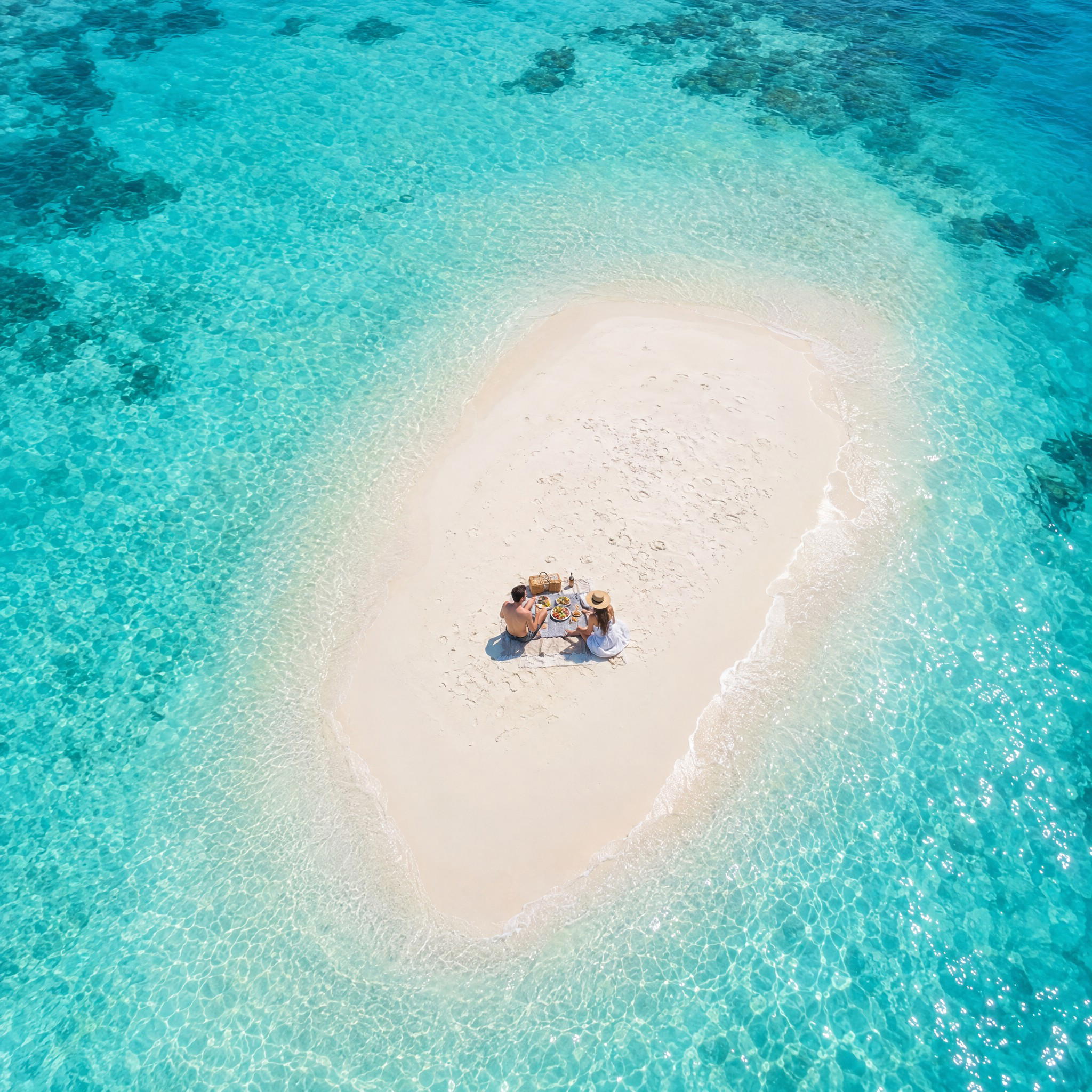
With calm water and long clear days, January is made for being taken out to an empty island with a picnic basket and nobody else in sight.
Driest month in Malé · 9.3 hours of sun · busiest month
February
February is the driest month of the year in Malé, with 38 mm of rain spread over barely three wet days, and it shares the title of sunniest month with March at 9.3 hours a day. It is also the busiest, by a distance: in 2025 the country welcomed more than 7,600 visitors a day in February, more than in any other month, and Chinese New Year, which falls on 6 February in 2027, adds to the demand.
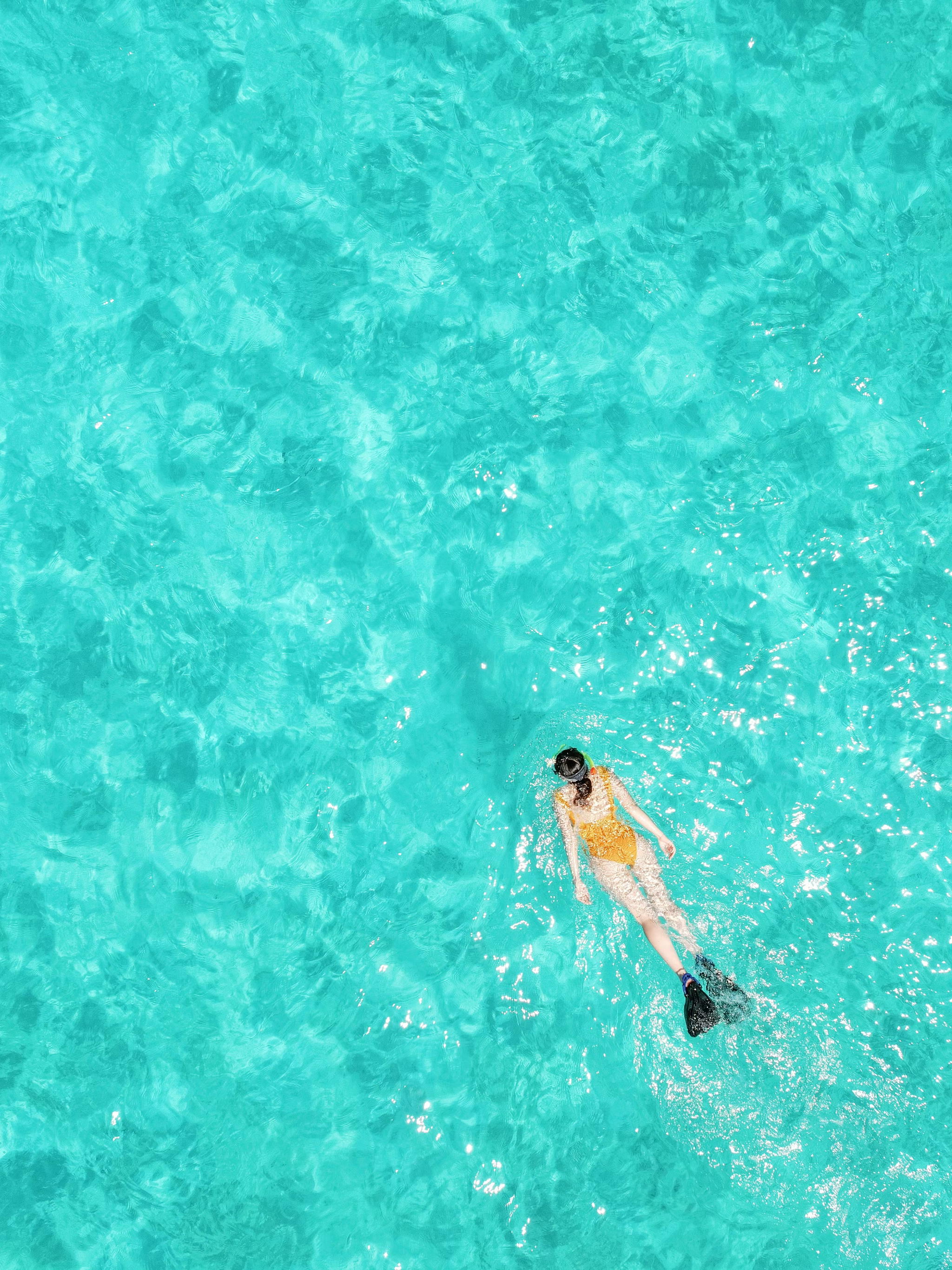
The steady north-east wind leaves the water at its clearest, which makes February the month to slip off the beach with a mask and fins and follow the reef for as long as the light holds.

Sunniest month · coral spawning begins · sea 29 °C
March
March matches February's sunshine and edges warmer, with Malé reaching 31.6 °C and the sea climbing to 29 °C. Rain stays scarce in the centre and the north, under 50 mm for the month, and the reefs begin the first of their two spawning seasons, which researchers working in Baa and North Malé have followed through March and April. Easter falls on 28 March in 2027, and the families arrive with it.
The evenings are long and clear, and there is no better reason to be out on the water as the sun goes down.
Hottest month · warmest sea at 29.7 °C · the wind turns
April
April is the hottest month of the year, with highs of 31.9 °C in Malé and 32.6 °C in the north, and the sea reaches its warmest at 29.7 °C. It is also the hinge of the year. The north-east wind fades, the wind swings round to the west, rain begins to return with 127 mm in Malé across the month, and the surf starts to build in the Malé atolls.
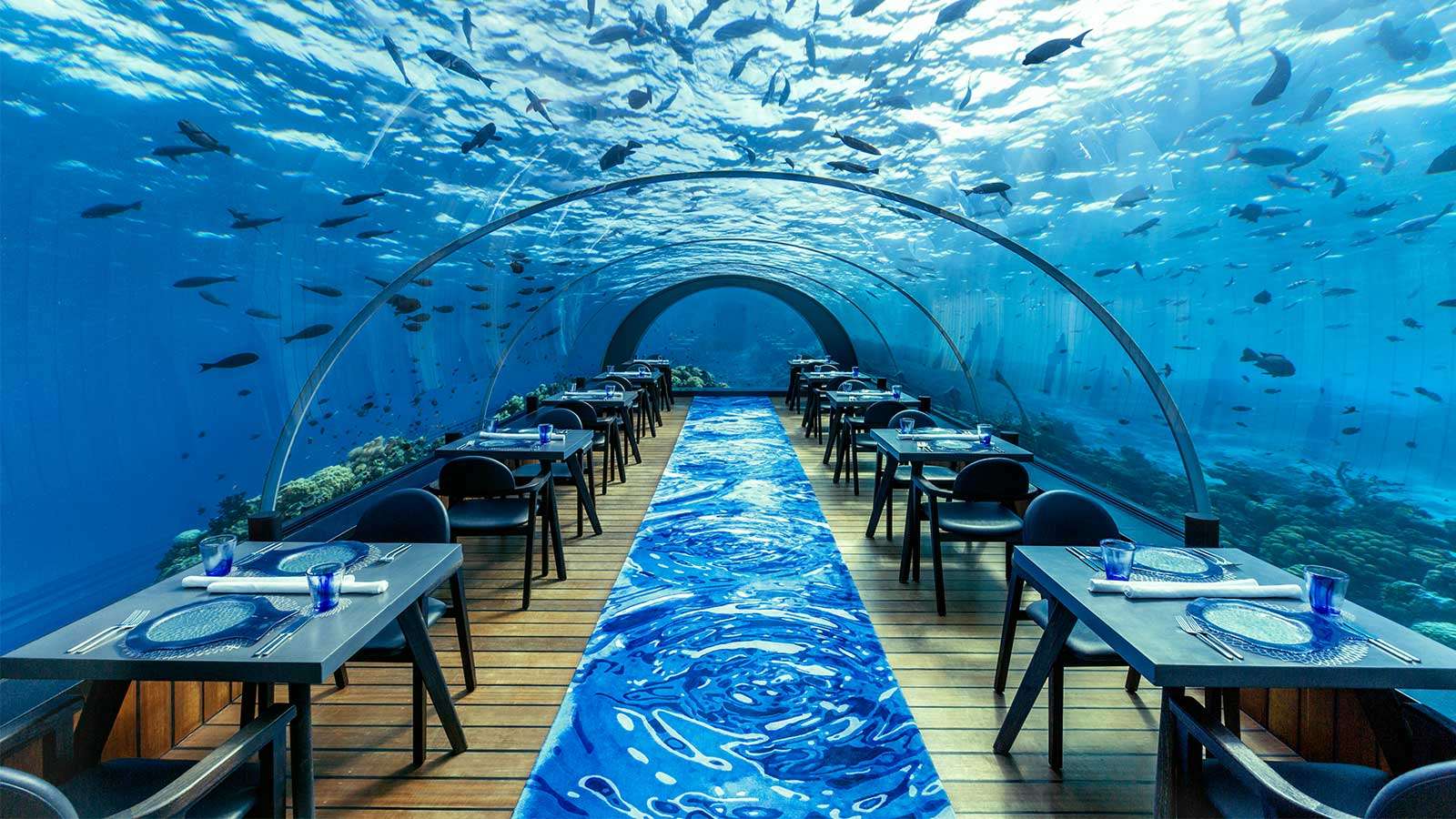
On the hottest afternoons, a long lunch 5.8 m below the lagoon, with the reef running along both walls, is a fine way to let the heat pass. Our guide to the nine underwater restaurants has the rest.
The south-west monsoon arrives · quietest month of the year
May
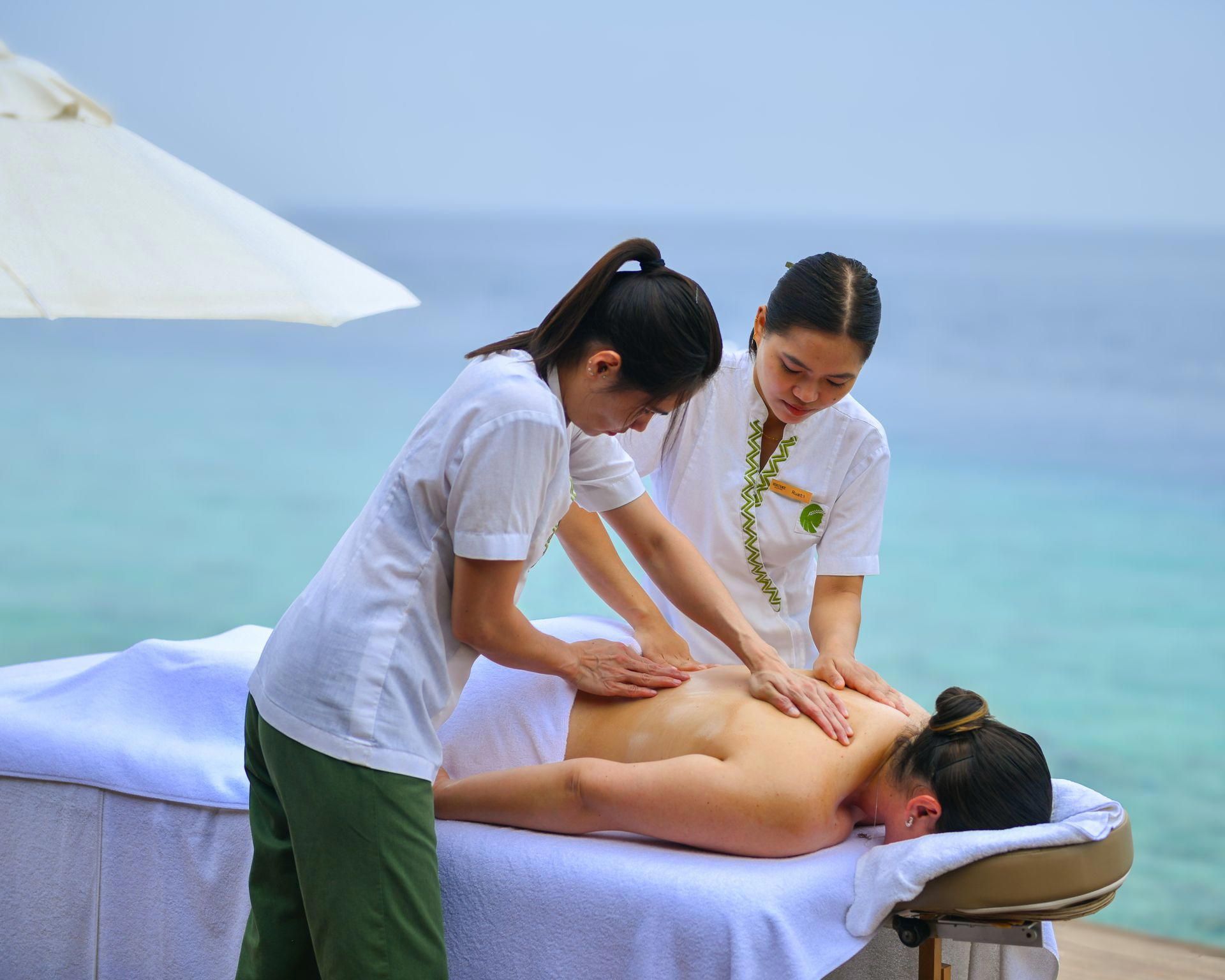
The Hulhangu arrives in May. It reaches the southern atolls first, usually in the first or second week, and covers the whole country by the end of the month, and rain jumps to around 240 mm at all three stations while sunshine falls to about seven hours a day. The sea stays warm at 29.6 °C, and the first mantas return to Hanifaru Bay as its season opens.
Arrivals fall with the weather. May is the quietest month of the year, with fewer than 4,400 visitors a day in 2025, which leaves the spas, the reefs and the best tables at their emptiest, and makes it the month to give a whole afternoon to a treatment.
Surf season builds · turtle nesting peaks
June
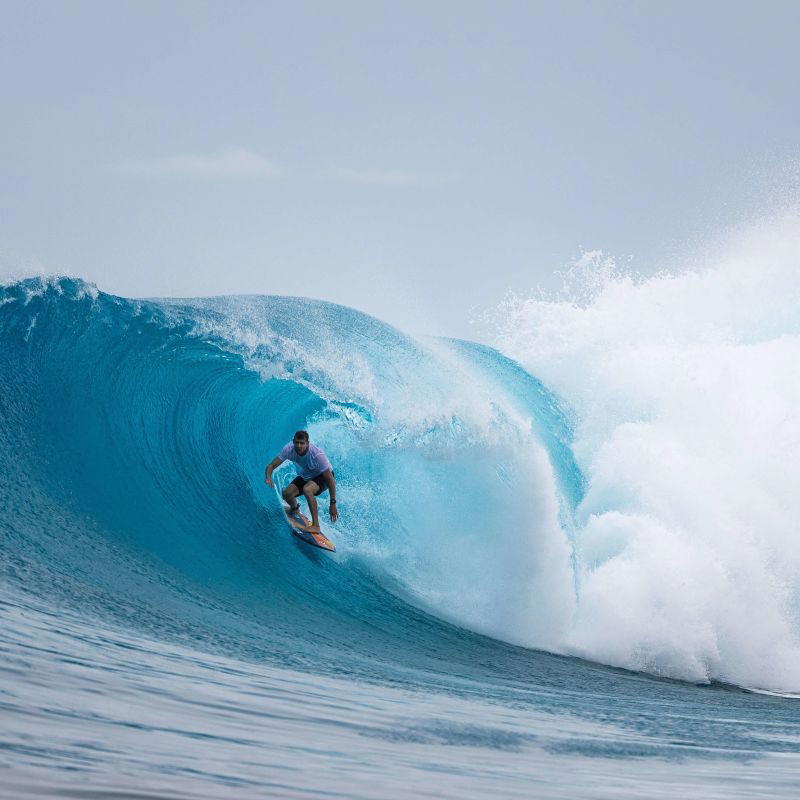
June is the wettest month in the north, where Hanimaadhoo records 17 rain days, while Gan in the south has fewer than ten. It is when the south-west swell starts to deliver the biggest waves of the year, which roll into the Malé atolls from June to August, and when green turtles come ashore to nest in the greatest numbers, from June through August. Visit Maldives counts June as the start of the best months at Hanifaru Bay.
For anyone who surfs, or has always meant to learn, this is the month to be on a board.
Hanifaru Bay at its peak · Independence Day
July
Photo: Ahmed Abdul Rahman, CC BY-SA 3.0, via Wikimedia Commons
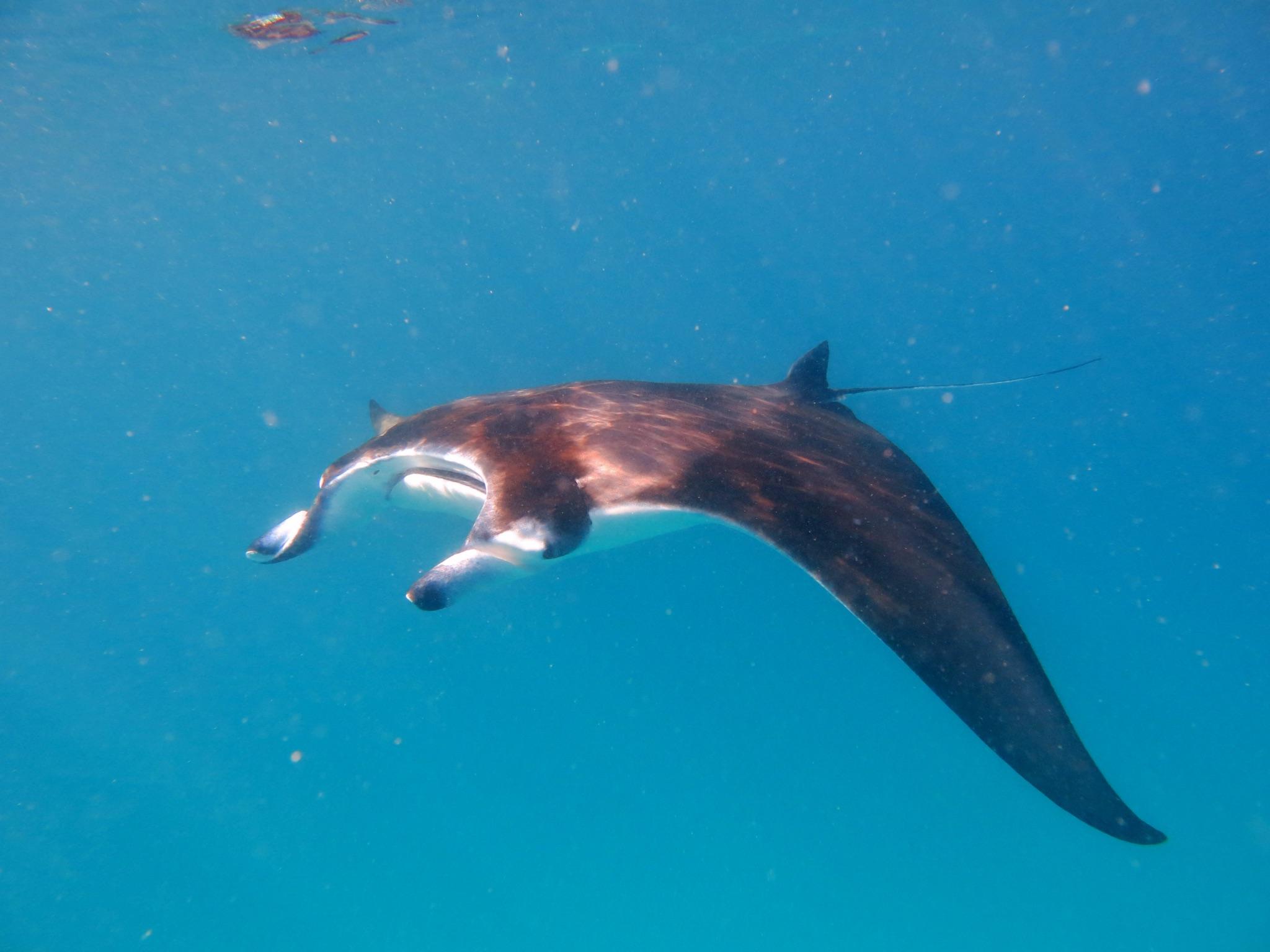
July brings the heaviest rain of the year in the north, 261 mm at Hanimaadhoo, and the start of the peak at Hanifaru Bay, which runs from July to September. The Maldives holds the world's largest known population of reef manta rays, and when the monsoon current pushes plankton into this small bay in Baa Atoll they gather to feed, with more than 250 individuals identified during the biggest events, most often on the high tides around the full and new moon.
The bay is protected and snorkel-only, with no more than five boats and 80 people allowed at a time, and Independence Day falls on 26 July.
Mantas still at their height · whale sharks in South Ari
August
Photo: Dapaan, CC BY-SA 3.0, via Wikimedia Commons
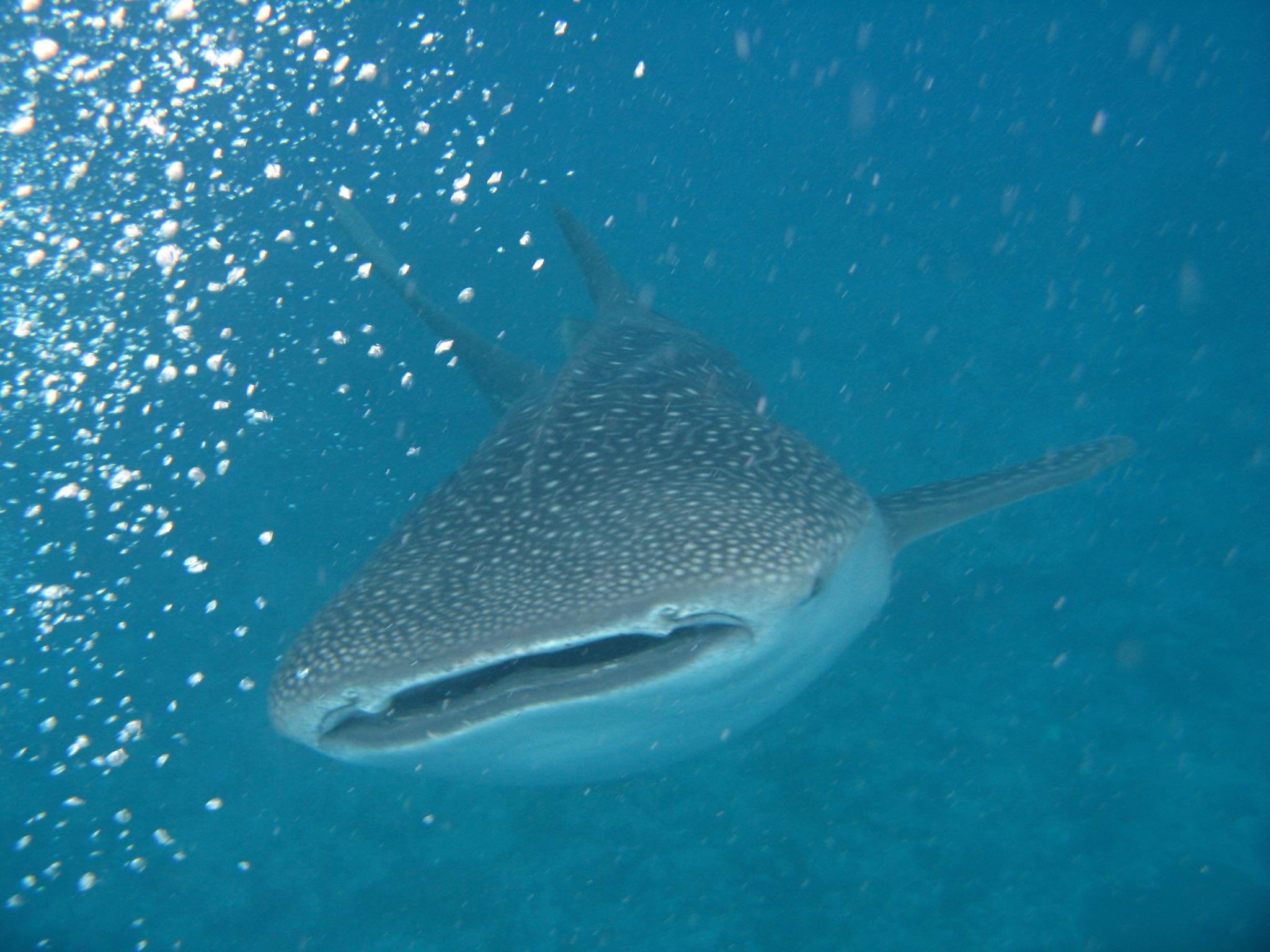
August keeps Hanifaru at its height, and it is a good month to look south as well. In the South Ari Marine Protected Area whale sharks are present all year, which researchers describe as unusual for the Indian Ocean, and more than 470 individual sharks have been identified there, most of them young males. During the south-west monsoon they tend to gather on the eastern side of the protected area.
Swimmers keep at least 3 m away, without touching and without flash, and going out with a marine biologist turns a sighting into an hour of learning how these sharks live.
Quiet month · surf contest at Sultans · starlight dinners begin
September
September is one of the quieter months, with fewer than 5,000 visitors a day in 2025, and Malé sees 214 mm of rain across about 15 wet days. The surf is still running, and the Four Seasons Surfing Champions Trophy was held at Sultans, off Kuda Huraa, from 4 to 11 September in 2026.
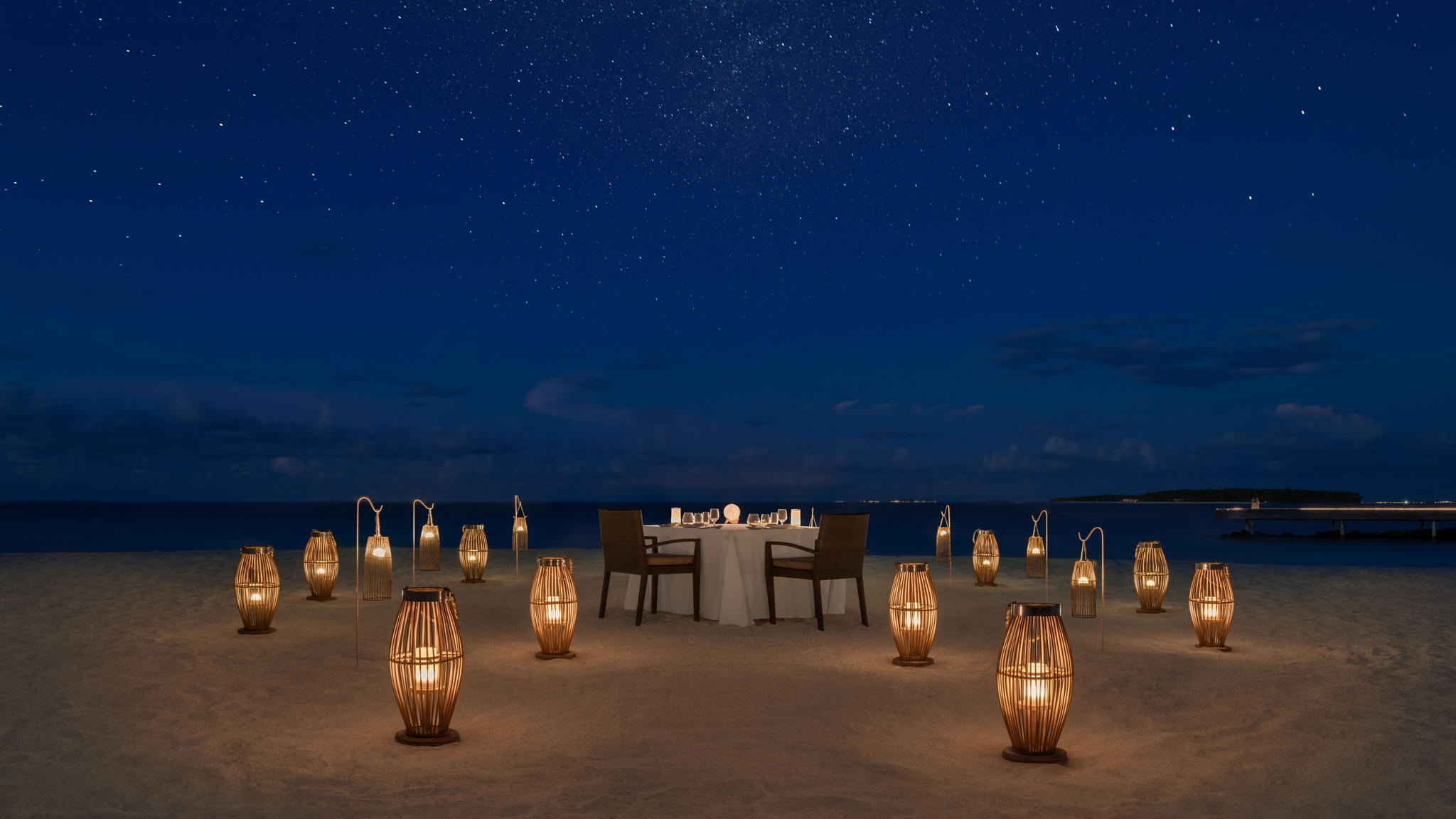
It is also when the St. Regis begins its season of starlight dinners, which runs from September to December.
Wettest month in Malé · the second coral spawning
October
October is the wettest month in Malé and in the far south, with about 245 mm at both, and it opens the reefs' second spawning season of the year, a window that runs on into December. Hanifaru's mantas are still feeding, and the sea holds at 28.3 °C.
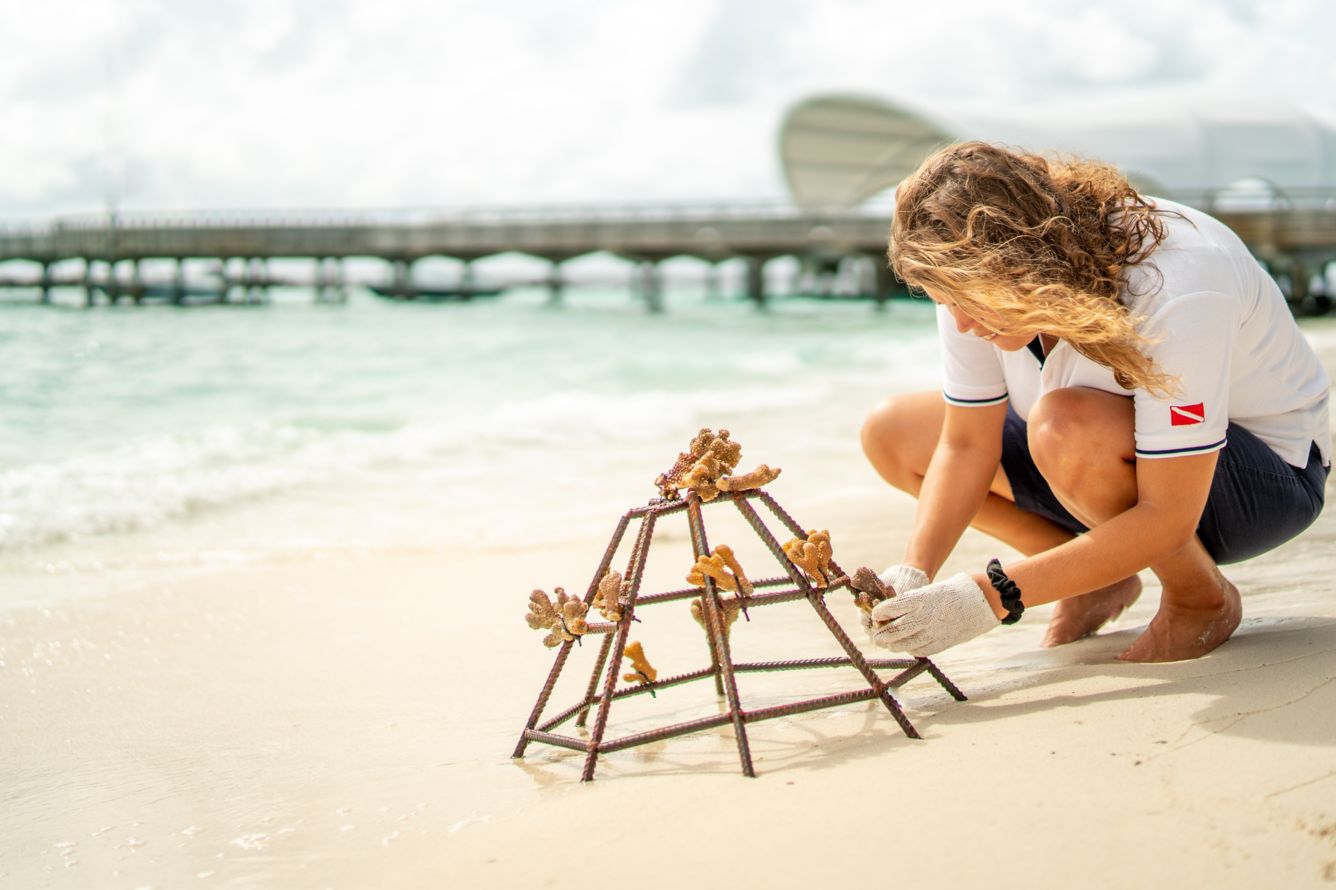
In Baa Atoll, where much of that coral research has been done, the Westin Miriandhoo runs a marine biology and coral restoration programme that guests can join, and October is a fine month to see a reef being rebuilt from the inside.
The wet monsoon ends · national days
November
November closes the south-west monsoon. Rain eases in the north to 172 mm, the wind begins to swing back towards the east, and the mantas start their move to the western sides of the atolls as the currents turn. Arrivals rise again ahead of the festive season, and two national days fall in the month, Victory Day on 3 November and Republic Day on 11 November.
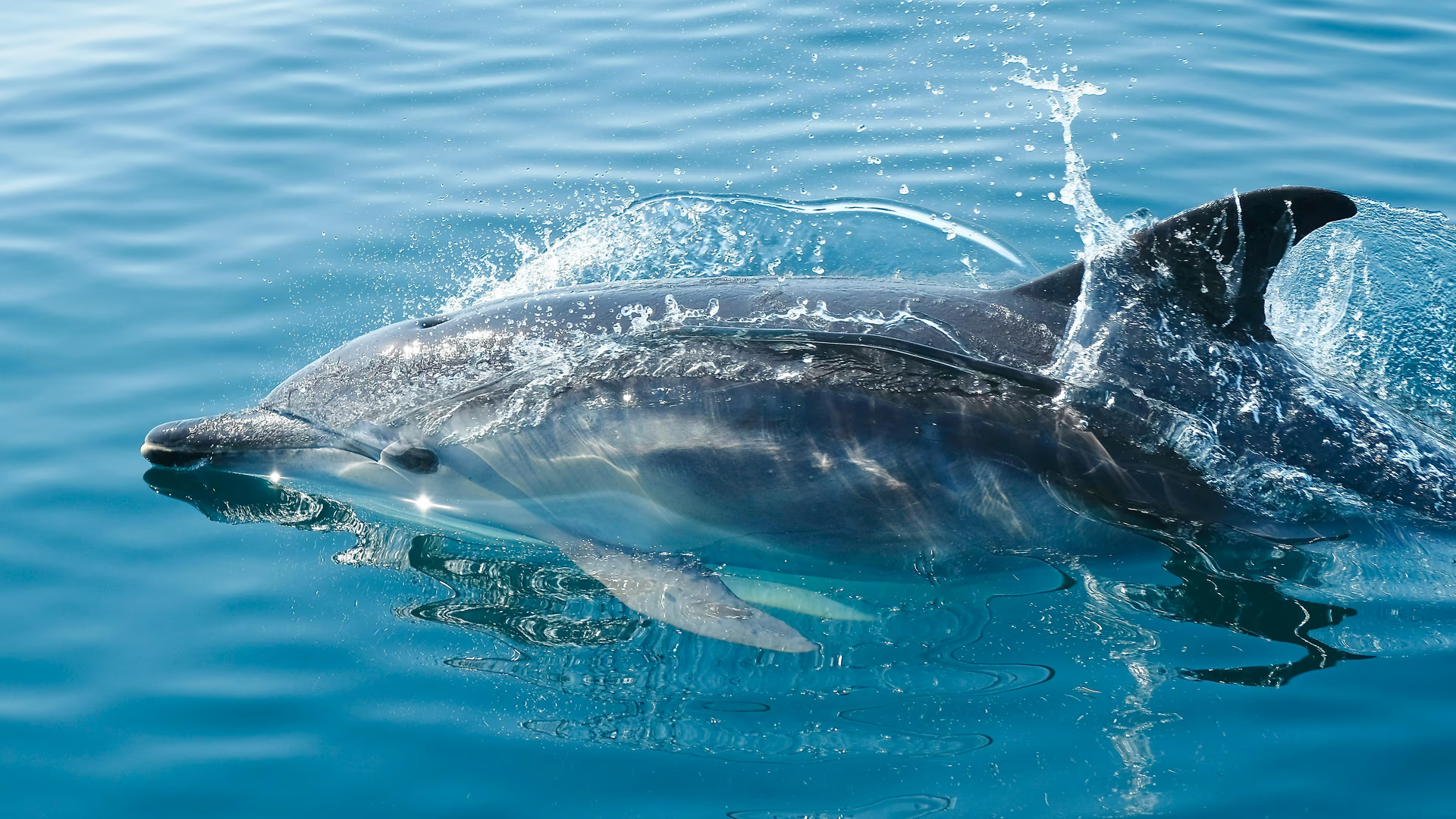
Dolphin trips run all year, 42 of the 46 resorts in the Kollection offer one, and November's lighter crowds make an evening out on the boat easy to book.
Festive season · the year's highest arrivals
December
December brings the most visitors of the year, more than 224,000 across the month in 2025. The north dries out first, with 108 mm at Hanimaadhoo against more than 200 mm in Malé and the south, and the north-east wind returns as the month goes on. Many resorts set minimum stays over Christmas and New Year and charge for gala dinners on 24 and 31 December, so book early and read the festive terms before you commit.
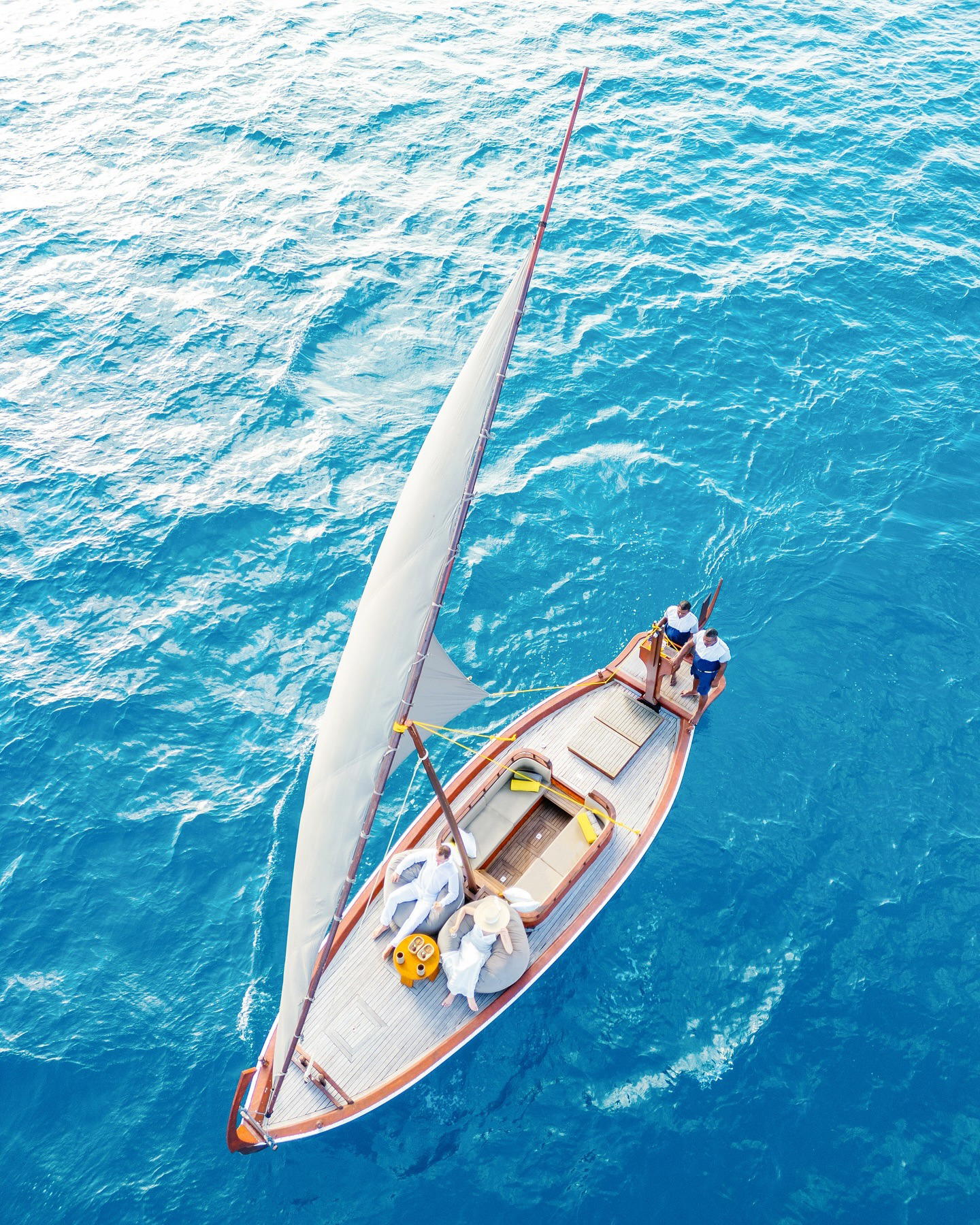
Between those evenings, a sunset out on a dhoni is the quieter way to mark the season.
The year at a glance
Air temperature, rain and sunshine come from the WMO climate normals for 1991 to 2020 at Hanimaadhoo in the north, Hulhulé beside Malé, and Gan on Addu Atoll in the south. Sea temperature is the NOAA Coral Reef Watch average for the Maldives, and arrivals are the Ministry of Tourism's figures for 2025.
| Month | Malé high / low (°C) | Rain (mm), north / Malé / south | Rain days, Malé | Sun (h a day) | Sea (°C) | Arrivals a day |
|---|---|---|---|---|---|---|
| January | 30.6 / 26.0 | 39 / 87 / 204 | 5.5 | 8.3 | 28.1 | 6,931 |
| February | 31.0 / 26.3 | 29 / 38 / 79 | 3.2 | 9.3 | 28.3 | 7,646 |
| March | 31.6 / 26.8 | 33 / 49 / 121 | 4.5 | 9.3 | 29.0 | 6,563 |
| April | 31.9 / 27.1 | 67 / 127 / 173 | 8.5 | 8.7 | 29.7 | 6,611 |
| May | 31.5 / 26.6 | 235 / 238 / 243 | 15.0 | 7.2 | 29.6 | 4,375 |
| June | 31.1 / 26.4 | 229 / 146 / 144 | 12.9 | 7.0 | 28.8 | 4,726 |
| July | 30.8 / 25.9 | 261 / 198 / 198 | 13.7 | 6.9 | 28.6 | 6,024 |
| August | 30.7 / 25.9 | 222 / 193 / 196 | 13.0 | 7.4 | 28.5 | 6,195 |
| September | 30.5 / 25.7 | 174 / 214 / 224 | 15.3 | 6.9 | 28.3 | 4,985 |
| October | 30.5 / 25.7 | 199 / 245 / 244 | 15.2 | 7.4 | 28.3 | 6,143 |
| November | 30.4 / 25.5 | 172 / 236 / 235 | 14.2 | 6.8 | 28.3 | 6,504 |
| December | 30.4 / 25.6 | 108 / 212 / 226 | 12.0 | 6.9 | 28.1 | 7,240 |
The two monsoons
The Maldivian year turns on two winds. The Iruvai, the north-east monsoon, blows from January to March and brings the dry, settled weather the islands are known for, with the wind steady from the east-north-east. The Hulhangu, the south-west monsoon, arrives in mid-May, reaching the southern atolls first, and lasts until November, with the wind from the west for most of that time. April and December sit between them, and the Meteorological Service treats both as months of transition.
The wet season is the longer of the two, and it is far from a washout. Even in the wettest months Malé averages around seven hours of sunshine a day, and the sea never drops below 28 °C.
Choose by what you want
- The driest weather: February and March in Malé and the north. The far south stays wetter all year.
- Manta rays at Hanifaru Bay: July to September, with the season running from mid-May into December.
- Whale sharks: any month in South Ari.
- Surf: June to August for the biggest swell in the Malé atolls.
- The quietest weeks: May, June and September.
- Coral spawning: March and April, then October to December.
Sources
Checked on 7 October 2026.
- Climate: WMO climate normals 1991 to 2020 (NOAA NCEI), Maldives Meteorological Service
- Sea temperature: NOAA Coral Reef Watch
- Mantas and Hanifaru Bay: Manta Trust
- Whale sharks: Maldives Whale Shark Research Programme
- Turtles: Olive Ridley Project
- Arrivals: Ministry of Tourism and Environment, 2025 figures
- Events: Visit Maldives events